
Bina Salimath (she/her) MA, RCC
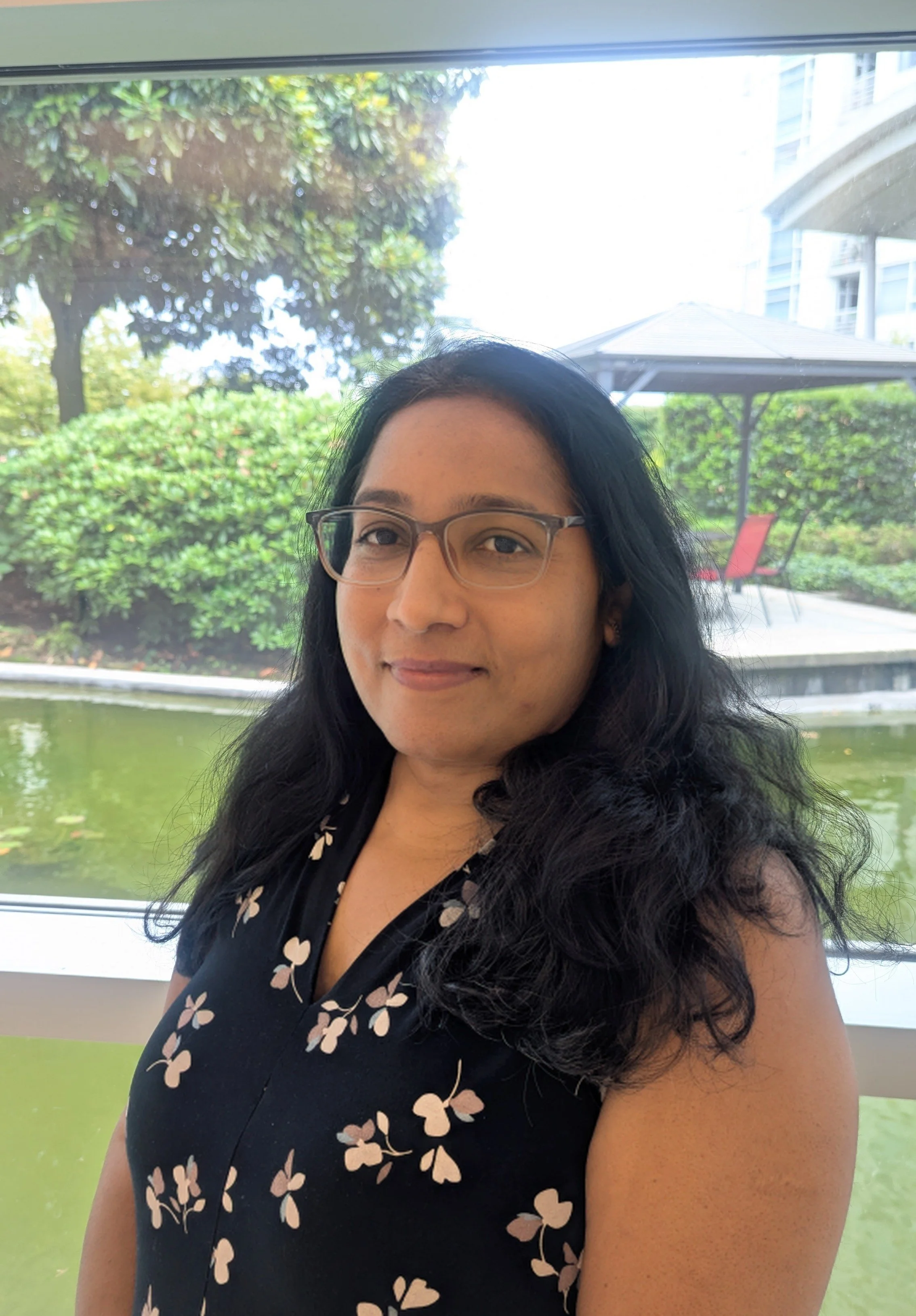
BA, MA, Registered Clinical Counsellor
Therapy Formats: Virtual & In-Person
I speak English & Hindi
Accepting New Clients
-
I came to counselling through my own lived experience, and my approach has been shaped by both my personal journey and more than 12 years of supporting others. I believe that while we are shaped by the experiences and circumstances we were given, especially in childhood, we do not have to be defined or limited by them.
To me, healing is about developing a deeper understanding of ourselves, building trust in our own choices, and finding the courage to move beyond old patterns toward a life that feels more authentic and meaningful. It also involves recognizing how our well-being is connected to our relationships, communities, cultures, histories, and the world around us.
My role is to offer a safe, compassionate space where you can be who you are without judgment, pressure, or the expectation to have everything figured out. Together, we can explore what may be keeping you from living more fully—whether rooted in childhood experiences, trauma, relationship challenges, or a less tangible sense of emptiness or disconnection.
Through curiosity, compassion, courage, and choice, I support you in cultivating greater safety within, trusting yourself more deeply, and creating possibilities for your life beyond what you may have previously imagined.
-
My approach is relational, person-centred, community-oriented, and culturally responsive. I draw from my lived experience, Western counselling approaches such as attachment theories, feminist and decolonial theories, CBT, DBT, and family systems and Vedic/Hindu worldviews. My work is guided in part by the Hindu concepts of svastha and dharma: being established in oneself and living in greater integrity and alignment with oneself and others, with a sense of health, balance, and harmony.
This includes becoming more aware of the conditioning, education, beliefs, and narratives that have shaped how we understand ourselves and the world around us. We can explore where these influences may create friction between what we know or feel within ourselves and what we believe we are expected to be. Often, our need for safety, belonging, and acceptance can lead us to silence our own knowing, disconnect from ourselves, or move away from what feels true.
My work invites you to notice these patterns with curiosity and compassion, and to reconnect with your truth. Through this process, we can begin to recognize what brings us into better alignment with ourselves, our relationships, our communities, and the life we want to create.
Depending on your counselling goals, we may use practices such as journaling, introspection, movement, breathwork, family genograms, ecomaps, ancestral work, and narrative approaches. For clients who wish to draw on Hindu or yogic traditions, I incorporate cultural practices of pranayama, Yamas and Niyamas, Jyotisha Shastra, and Vedic and Puranic stories as part of the therapeutic process. I also support you to draw from your own cultural stories, family memories, and collective archetypes to bring healing, insights, and direction to your life experience. This is particularly significant in understanding transgenerational patterns of suffering, ambiguous loss and trauma where there is a collective history of harm perpetrated on population groups.
My approach is designed to hold you in a safe space as you develop greater insight, flexibility, self-trust, and agency to move towards a life that feels more aligned with who you are.
-
I am originally from India and have called Vancouver home for the past 26 years. As an immigrant, mother, birder, counsellor, and lifelong learner, I have come to appreciate the many layers of identity, belonging, family, culture, and change. I believe we are shaped not only by what happens within us, but also by our relationships, communities, cultures, and the natural world.
My experiences of childhood trauma and family dynamics led me to explore how our histories can shape our identity, relationships, and the stories we come to believe about ourselves. Instinctively, I became drawn to the idea of reclamation—finding and connecting with aspects of ourselves that may have been shamed, silenced, displaced, or shaped by experiences that were never ours to carry. I had to learn to cultivate the courage to make the desired changes.
Interestingly, reclamation was part of my earlier career as a chemical engineer. I worked with industrial wastewater to help restore environments that had been impacted over time. Looking back, I see a natural connection between that work and counselling. Healing, too, can involve understanding what has accumulated, tending to what has been hurt, letting go of what no longer belongs, and creating space for renewal and growth.
Today, reclamation is at the heart of how I understand healing. We each have our own relationship with what feels important to reclaim—whether that is our sense of self, our histories, values, culture, relationships, voice, or sense of possibility.
I firmly believe healing and renewed passion for creativity and growth is available to all of us. It is not something we have to do alone, and having support can help us access it more easily and possibly faster.
-
Shame, Self-esteem, self-worth, loneliness, and limiting beliefs
Self-abandonment and people-pleasing, including patterns of putting others’ needs before one’s own
Childhood, familial, intergenerational, and racial trauma
Difficult family dynamics, collective family systems, and generational differences in East Indian/South Asian/Hindu families
Gendered violence
Separation, divorce, co-parenting and custodial issues, family reunification, and MCFD involvement
Cultural shame, disconnection or loss, colourism, and internalized oppression
Immigration stress
Caregiver burnout, supporting loved ones with serious mental health conditions
Grief and loss
Anxiety, depression, grief and loss, and chronic pain
Midlife transitions and aging, including changes in identity, relationships, and life direction
Perimenopause and menopause, and the emotional and relational changes associated with these transitions
Cultural reclamation and decolonization (unpacking how culture, history, and community shape your sense of self and belonging)
Collective and transgenerational trauma, including how histories and inherited experiences can influence individuals, families, and communities
-
Psychotherapy and therapeutic coaching for individuals and couples.
Individual session - 50 min: $180
80 min: $250
Couples session - 50 min: $200
80 min: $270
Accepts Extended Health Coverage (for clients in BC)
If you’re unable to find an available time that works for you, please reach out to bina@innerverseintegratedhealth.com